
Executive protection (EP) work means keeping high-profile clients — executives, diplomats, entertainers — safe without disrupting their schedules or drawing attention. It blends threat assessment, discreet planning, and calm decision-making under pressure. An executive protection course is how most people break into or move up in this field, since few employers hire for EP roles without some formal training and, in New York, a state security guard license.
This guide covers what these courses actually teach, how long and how much they typically cost, how to evaluate one before enrolling, and what jobs and salary ranges follow.
What Is an Executive Protection Course?
An executive protection course is a structured training program — typically ranging from a single 8-hour introductory session to multi-week certification programs — that teaches security professionals how to plan for, identify, and respond to threats against a specific individual. Unlike general security guard training, EP coursework focuses on advance work (scouting locations before a client arrives), route planning, protective formations, and low-profile client management.
At a glance:
| Format | Typical Length | Best For |
|---|---|---|
| Introductory / workshop | 8 hours (1 day) | Testing interest, entry-level exposure |
| Standard certification | 2 days (16 hours) | Licensed guards adding an EP specialization |
| Comprehensive / advanced | 5–27 days | Career-focused agents pursuing corporate/dignitary work |
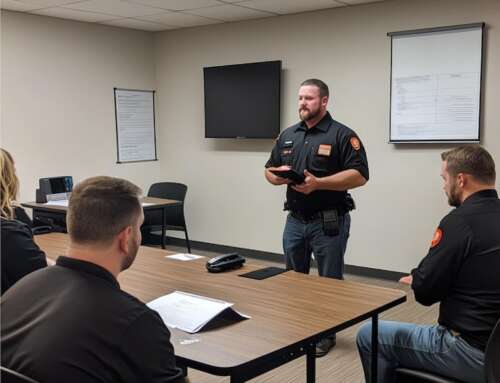
KTI NYC’s program falls into the standard certification tier: a two-day, 16-hour course combining classroom instruction with real-world case studies.
What Do Executive Protection Courses Actually Teach?
Curriculum varies by provider, but most reputable programs cover:
- Threat and risk assessment
- Advance work and protective planning
- Situational awareness and observation skills
- Emergency response and medical basics
- Communication and radio procedures
- Ethics, professionalism, and client discretion
- Travel, transport, and motorcade security
- Applicable licensing and regulatory requirements
Some longer or more advanced programs add defensive driving, firearms proficiency, and physical defensive tactics — worth checking for if you’re aiming at corporate or dignitary-level roles rather than entry-level event security.
Who Should Take an Executive Protection Course?
- Licensed security guards looking to specialize and increase earning potential.
- Corporate security staff responsible for executives, offices, or VIP visitors.
- Military and law enforcement veterans transitioning into private-sector protective work — prior training often shortens the learning curve but doesn’t replace the licensing and civilian-specific coursework.
- Career-changers exploring the field before committing to a full licensing path.
Prerequisites differ by state and provider. In New York, you generally need an active NYS Security Guard License before an EP certification carries weight with employers.
Online vs. In-Person Executive Protection Training
| Format | Advantages | Trade-offs |
|---|---|---|
| Online | Flexible scheduling, lower cost, no travel | No hands-on skill practice |
| In-person | Live scenario practice, direct instructor feedback | Fixed schedule, location-dependent |
| Blended | Theory online, physical skills in person | Requires coordinating both components |
Most credible programs — including KTI NYC — use a blended model: theory delivered via Zoom, with the practical/certification component completed in person, since skills like route planning and emergency response don’t transfer well through video alone.
How to Evaluate an Executive Protection Course
Before enrolling, check:
- Curriculum depth — does it go beyond theory into scenario-based practice?
- Instructor background — real EP or protective-service field experience, not just general security teaching.
- Course length — is 8 hours enough, or do you need the fuller 16-hour+ program?
- Certification — does completion produce documentation employers actually recognize?
- Licensing alignment — is the course valid for the state you plan to work in?
- Cost vs. value — the most expensive course isn’t automatically the best one; match it to your career stage.
Career Paths and Earning Potential After Executive Protection Training
Completing a course doesn’t guarantee a job, but it opens doors employers otherwise won’t consider you for. Common next steps include:
- Corporate security / in-house executive protection
- Private protective services firms
- Event and venue security
- Travel security for high-net-worth individuals
- Celebrity and entertainment security
- Security consulting and risk management
Entry-level EP roles often start from general security guard pay and scale up with experience, licensing, and client type — corporate and dignitary-level assignments generally pay more than event-based work. (Link to your salary guide post here if you have one — internal linking to a salary-specific article would strengthen both pages.)
FAQs
What is an executive protection course?
An executive protection (EP) course is specialized training that prepares security professionals to protect high-profile individuals — executives, diplomats, celebrities — through threat assessment, advance planning, and discreet client management.
What do executive protection courses teach?
Core topics include threat and risk assessment, protective planning, advance work, communication procedures, emergency response, and professional ethics. Content and depth vary by provider and course length.
Can you complete an executive protection course online?
Parts of it, yes — theory and classroom instruction are often delivered online. Physical skills like defensive driving or advance work are typically taught in person, so fully online EP certification is uncommon among reputable providers.
How much does an executive protection course cost?
Cost varies by length and provider — 8-hour introductory sessions cost less than multi-day certification programs. Contact providers directly for current pricing, since rates change and vary by region. (Fill in KTI’s actual price here — this is a strong quick-win for both SEO and AI-citation, since exact figures get pulled into search snippets and AI answers more often than vague ranges.)
Is executive protection training suitable for beginners?
Some programs accept beginners; others expect an active security guard license or prior field experience. Check provider requirements before enrolling — in New York, an NYS Security Guard License is typically expected going in.
Ready to build EP skills that hold up in the field?
KTI NYC’s Executive Protection Training course is a two-day, 16-hour certified program combining classroom instruction with real-world case studies.